Sewer Line Leak Detection in Belleville, NJ

High-definition camera inspection and precision diagnostics for cracked sewer laterals and drain lines. Find the source before opening walls or digging.

High-Definition Sewer Line Leak Detection in Belleville, NJ

Subterranean sewer laterals and vertical building drain stacks represent some of the most critical yet vulnerable infrastructure in older New Jersey properties. In established areas like the Washington Avenue corridor and the Soho section, many homes rely on legacy vitreous clay pipe laterals or heavy cast-iron drain lines installed decades ago.

When you require professional sewer line leak detection Belleville NJ diagnostics, guesswork is not an option. Our certified diagnostic specialists perform comprehensive sewer camera inspection Belleville homeowners rely on to guide accurate sewer line leak repair Belleville solutions. By locating a cracked sewer pipe Belleville NJ property owners face before excavation begins, we save landscaping, concrete slabs, and historic building finishes.
Sewer line camera inspection and leak detection in Belleville NJ showing technician viewing monitor

Signs of a Cracked or Leaking Sewer Lateral

Because sewer laterals carry gravity wastewater beneath lawns and basement slabs, leaks can go undetected until structural movement or foul smells appear. Watch for these indicators:

Persistent Sewer Gas Odors

A foul, rotten egg smell inside your basement, bathroom, or yard indicates sewer gas escaping through a cracked pipe wall, compromised cleanout cap, or dried-out trap.

Unexplained Lawn Indentations & Lush Grass

Wastewater escaping an underground break acts as a potent fertilizer, creating unnaturally lush, green strips of grass above the sewer line accompanied by ground sinkholes.

Slow Drains Across Multiple Fixtures

If sinks, bathtubs, and toilets throughout the home drain sluggishly at the same time, the restriction or structural collapse is located in the main subterranean lateral.

Moisture Seeping Along Basement Foundation Walls

Sewer wastewater pooling outside the foundation exterior will migrate through mortar joints, staining finished basement drywall and emitting foul odors.

Gurgling Sounds in Toilets

Air trapped behind a partially collapsed or blocked subterranean lateral forces air bubbles back up through toilet bowl water traps, creating audible bubbling.

Recurring Sewage Backups in Basements

Water or waste backing up into basement floor drains whenever washing machines discharge or multiple showers run points to a structural line rupture.

Noticing foul odors or sluggish drainage across your property?

Pinpoint the break with precision camera technology. Speak directly with a Belleville leak specialist.

Call (201) 510-1615

Why Belleville Sewer Lines Experience Failures

Subterranean sewer infrastructure across Essex County faces predictable aging stresses:

  • Vitreous Clay Lateral Shifting: Installed extensively in early 1900s homes, short clay pipe segments are held together by mortar. Over time, ground movement dislodges joints, allowing wastewater to seep into the surrounding soil.
  • Aggressive Tree Root Intrusion: Mature shade trees along the Belleville Park area send micro-roots through hairline joints in search of water and nutrients, expanding until pipes fracture completely.
  • Channeling & Rust in Cast Iron: Cast-iron drain pipes running under basement concrete slabs suffer bottom-channel corrosion over 50+ years, eventually rotting away the bottom half of the pipe.
  • Passaic River Floodplain Dynamics: High groundwater tables near the Passaic River accelerate soil erosion around buried pipes, causing sewer laterals to belly, sag, or sheer off at the foundation wall.

Safety Warning on Sewer Gases

Gas Identification Note: Sewer gas contains methane and hydrogen sulfide, which smells like rotten eggs. However, natural gas utilities also add a mercaptan odorant that smells identical. If you smell strong sulfur or gas, immediately evacuate the property and call 911 or PSE&G from a safe location. Once verified safe from fuel gas, our technicians diagnose plumbing drain leaks.

Our Step-by-Step Sewer Line Diagnostic Process

Step 1: High-Definition In-Line Video Inspection

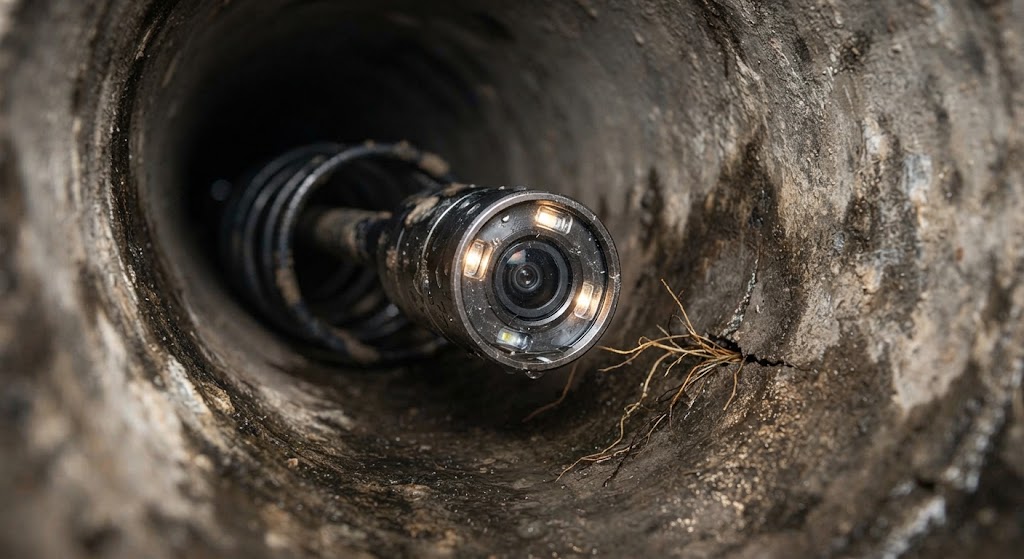
We insert a self-leveling HD optic camera with LED lighting down the sewer cleanout, transmitting real-time full-color footage of pipe interior walls to inspect for cracks, root balls, and joint separation.

Step 2: Electromagnetic Sonde Radio Locating

The camera head features a built-in 512 Hz radio transmitter (sonde). As it navigates the line, our technicians track the signal from the surface to map the exact physical path, depth, and coordinate of the break.

Step 3: Non-Toxic Vapor & Smoke Testing

For mysterious sewer odors inside finished living areas, we introduce non-toxic diagnostic vapor under mild pressure to see exactly which wall cavity, unsealed vent, or cracked riser is leaking gas.

Step 4: Hydrostatic Drain Pressure Testing

In sub-slab building drains, test plugs are inserted to fill sections with water and verify whether gravity drainage lines are holding or losing volume into structural fill.

What Happens After the Sewer Leak is Located?

Once camera diagnostics and surface locating pinpoint the exact problem point and depth, you can discuss targeted repair options with your plumbing contractor:

  • Trenchless Epoxy CIPP Pipe Lining: If the pipe is intact with minor cracks or root intrusion, an epoxy-saturated felt tube is pulled into place and cured, creating a seamless new pipe inside the old one without digging up your yard.
  • Targeted Spot Excavation: If a clean break or localized collapse is confined to a specific coordinate, excavating a small access pit to replace that single segment avoids full lawn destruction.
  • Traditional Trenching & Lateral Replacement: For severely crushed, back-pitched, or collapsed clay laterals, full trench replacement with modern SDR-35 PVC restores proper gravity flow.

New Jersey requires plumbing drainage work to be performed under the supervision of a licensed master plumber.

Sewer Repair Cost Factors

Overall project investment depends on specific structural variables:

  • Depth of the Lateral: A line buried 3 feet deep in a front lawn is far less costly to access than a 9-foot-deep lateral approaching the municipal main in the street.
  • Surface Restoration Requirements: Repairing beneath landscaped grass avoids the substantial expense of cutting, repaving, and restoring concrete driveways or public asphalt.
  • Suitability for Trenchless Lining: Homes qualified for CIPP lining avoid structural demolition and heavy equipment excavation fees.

Preventative Tips for Healthy Drains

Preserve your subterranean sewer pipes with practical maintenance:

  • Avoid Flushing Wipes & Grease: Never dispose of cooking fats, hygiene wipes, or fibrous products down drains; they congeal and snag on pipe imperfections.
  • Periodic Preventative Camera Checks: If your Belleville home is over 50 years old, schedule regular camera inspections to catch root intrusion early.
  • Root Management: Apply environmentally approved foaming root treatments periodically if mature trees surround your sewer alignment.

When a Sewer Leak is an Emergency

Raw sewage discharge presents severe biological hazards and immediate property damage risks:

  1. Stop using all plumbing fixtures immediately—do not run water or flush toilets.
  2. Keep pets and family members away from contaminated basement areas.
  3. Turn off electrical breakers in flooded basement zones if safe to do so.

Review our emergency leak repair resource for immediate emergency steps.

Common Neighborhoods & Frequently Asked Questions

Root intrusion and cracked clay laterals are exceptionally common along the tree-lined streets of the Belleville Park area and older residential parcels in Silver Lake.

How does a camera inspection find sewer leaks?

A high-definition flexible optic camera is fed through your main sewer cleanout. It transmits real-time video displaying cracks, root penetrations, standing water, and disconnected joints, while a built-in radio sonde pinpoints the location above ground.

Can tree roots crack my sewer pipe?

Yes. Microscopic tree roots enter through mortar joints or hairline fissures in older clay and cast-iron sewer pipes in search of moisture. As the roots feed and grow, they exert massive mechanical pressure that splits the pipe open.

What is the difference between a sewer clog and a cracked pipe?

A clog is a simple soft blockage from grease or paper that can be cleared with snaking or hydro-jetting. A cracked pipe is a physical structural failure where the pipe wall is fractured, allowing sewage to escape into the soil or roots to continuously enter.

Related Leak Detection Services

Suspecting clean water line leaks outside? View our water line leak detection. For basement water diagnostics, explore basement leak detection, or return to our homepage for leak detection in Belleville and view our regional service areas.

Call (201) 510-1615
Call (201) 510-1615