Basement Leak Detection in Belleville, NJ

Answering the vital question: is water in your cellar a pressurized plumbing leak or exterior groundwater seepage? Find the exact source before opening walls.

Basement Leak Detection in Belleville, NJ: Plumbing vs. Groundwater

When dampness gathers along basement foundations or puddles expand over concrete slabs, homeowners must immediately distinguish between groundwater intrusion and mechanical plumbing failures. Throughout the Belleville Park area and the Washington Avenue corridor, early- and mid-1900s homes feature deep basements with stone masonry, concrete blocks, or cast foundations that house central utilities.

Scheduling professional basement leak detection Belleville NJ services allows you to accurately determine if water in basement plumbing leak Belleville issues are originating from pressurized supply pipes, water heaters, and drain risers. Before you consider thousands in excavation or waterproofing, non-invasive testing solves the mystery of a basement pipe leak Belleville home owners face or a persistent wet basement leak Belleville NJ condition.
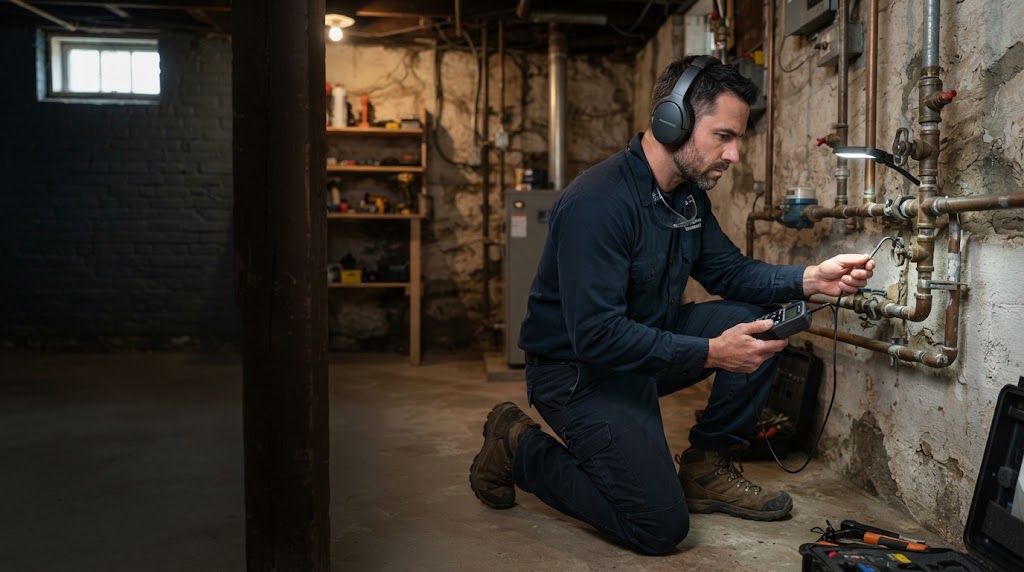
Technician performing basement leak detection in Belleville NJ inspecting basement foundation and pipes

Signs of a Basement Plumbing Line Leak

While seasonal heavy rain can push groundwater through masonry joints, plumbing leaks occur regardless of weather. Watch for these diagnostic indicators:

Water Accumulating in Dry Weather

If puddles form on your concrete floor during prolonged dry spells when the outside soil is completely arid, the moisture is almost certainly originating from an active plumbing line.

Warm Moisture or Steaming Slabs

Groundwater entering a cellar is consistently cool. If standing water feels warm to the touch or if a thermal inspection detects high temperatures near floor drains, a hot water line or water heater tank is leaking.

Damp Finished Drywall in Basements

In renovated recreation rooms, water trickling behind sheetrock often stems from upper-floor supply drops, baseboard heating loops, or vertical drain stacks rather than foundation seepage.

Water Meter Dial Continues Advancing

When every fixture upstairs is shut off, any continuous revolution of your water meter test dial proves that potable water is escaping directly into your cellar.

Efflorescence vs. Active Wet Streams

While chalky white salt deposits (efflorescence) indicate historical moisture migration through masonry, clear, odorless standing water points toward an active domestic supply failure.

Sump Pit Running Continuously

If your sump basin fills and pumps around the clock regardless of recent rainfall, a ruptured underground service line or subterranean plumbing line may be discharging straight into your drainage perimeter.

Unsure whether your basement issue is plumbing or groundwater?

Avoid expensive and unnecessary excavation. Call our team to test your plumbing lines first.

Call (201) 510-1615

Common Causes of Basement Leaks in Belleville Residences

Basements across Belleville endure substantial mechanical and environmental pressures:

  • Aging Water Heater Tanks & Relief Valves: Mineral-rich water accelerates internal tank corrosion, causing bottom seams and temperature & pressure (T&P) relief valves to seep water onto basement floors.
  • Vibrating Supply Risers: Unanchored copper lines feeding upper stories vibrate under hydraulic hammer, causing fatigue cracks near overhead basement floor joists.
  • Corroded Cast-Iron Floor Drains: Decades of caustic drainage degrade below-slab cast-iron traps, allowing sewage or drain water to backup beneath slab penetrations.
  • Passaic River Basin Hydrology: Proximity to low-lying areas near Route 21 and the Passaic River elevates local water tables, creating hydrostatic pressures that test aging foundation joints.

Essential Safety Warning

Natural Gas Precaution: Basements frequently contain gas boilers, furnaces, and water heaters. If you detect any odor of natural gas (sulfur/mercaptan), do not flip switches or investigate water pipes. Evacuate everyone from the property immediately and call 911 or your gas utility. We strictly service potable water and plumbing drainage lines.

Our Step-by-Step Basement Leak Detection Methodology

Step 1: Chemical Water Content Testing

We test standing basement water for chlorine and fluoride content. The presence of municipal treatment chemicals instantly confirms treated domestic tap water, ruling out exterior groundwater or rain runoff.

Step 2: Supply Line Pressure Decay Isolation

Digital pressure gauges are mounted to basement hose bibbs or drain valves. Pressure monitoring while isolated verifies whether domestic hot or cold plumbing lines are dropping pressure.

Step 3: Thermal Infrared Perimeter Profiling

High-resolution infrared scanning inspects finished basement walls and concrete floors to trace thermal plumes back to concealed pipes or leaking heating loops.

Step 4: Acoustic Listening on Slabs and Walls

Using ground microphones, we listen for acoustic friction signatures generated by pressurized water escaping behind basement partitions or below the poured concrete floor.

What Happens After the Leak is Found?

Once the exact source of basement water intrusion is pinpointed, we provide a clear diagnostic summary. If the problem is confirmed as plumbing-related, repair options generally involve:

  • Targeted Pipe Section Splicing: Cutting away pinholed copper runs or corroded galvanized fittings along exposed joists and installing modern copper or PEX tubing.
  • Water Heater Component Replacement: Replacing failed shut-off valves, expansion tanks, or discharge piping.
  • Drain Stack or Trap Repair: Opening a minimal section of finished basement wall to access and repair cracked PVC or cast-iron drain fittings.

All plumbing repairs in New Jersey must be completed by a licensed master plumber.

Key Cost Considerations

Overall repair expenditures depend on specific structural and plumbing variables rather than guesswork:

  • Unfinished vs. Finished Basements: Exposed ceiling joists in unfinished basements allow quick access, whereas finished basements with drywall ceilings and tiled floors require precision pinpointing to avoid extensive demolition.
  • Sub-Slab vs. Overhead Piping: Breaches below the poured concrete slab require targeted concrete core access, whereas overhead lines are readily accessible.
  • Duration of Water Intrusion: Prolonged moisture may require professional drying equipment to protect sill plates and framing from mold.

Basement Water Prevention Strategies

Protect your lower level with these straightforward maintenance habits:

  • Test Your Main Water Shut-Off Valve: Ensure your interior quarter-turn ball valve operates freely so you can shut down house water instantly if a pipe fails.
  • Install Water Leak Sensors: Place battery-powered acoustic alarms near the water heater, washing machine, and basement sump pit.
  • Inspect Water Heater Age: Tanks older than 10 to 12 years are prone to internal rust failures; replace sacrificial anodes periodically.

When Basement Water is an Emergency

If water is rising rapidly across electrical outlets, boiler baseboards, or near the main electrical panel, treat the situation as an immediate emergency:

  1. Do not step into standing water if it reaches electrical wiring or appliances.
  2. Shut off power from the main breaker only if you can do so safely from a dry area.
  3. Close the main water shut-off valve to stop incoming pressurized supply.

Review our emergency leak repair procedures for immediate steps.

Common Neighborhoods & Frequently Asked Questions

Basement leak inquiries are especially frequent in older residential pockets near Silver Lake and along the Soho section, where older multi-family properties feature shared utilities and dense basement piping.

How can you prove water is from a pipe rather than the foundation?

We utilize chemical chlorine testing to detect treated municipal water, perform static pressure decay testing on plumbing supply lines, and use acoustic listening devices that detect pressurized leaks even beneath concrete slabs.

Can an overhead bathroom leak look like a basement foundation problem?

Yes. Water escaping from a second-floor bathroom can track down pipe chases and vertical drain stacks inside walls, only emerging at the bottom of the basement sill plate where it pools on the concrete floor.

What should I do while waiting for leak detection specialists?

Move sensitive belongings off the basement floor, note whether the water meter is moving with all faucets off, and avoid disturbing any damp drywall until diagnostic testing is complete.

Related Leak Detection Solutions

Wondering if water is traveling from an upstairs fixture? Check our shower & bathroom leak detection. If you have pinhole issues along overhead lines, see pipe leak repair, or return to our homepage for leak detection in Belleville and view our regional service areas.

Call (201) 510-1615
Call (201) 510-1615