Pipe Leak Repair in Belleville, NJ

Pinpointing and addressing copper pinhole leaks, corroded galvanized runs, and winter burst pipe emergencies. Talk with a local leak specialist.

Pinpoint Diagnostics for Pipe Leak Repair in Belleville, NJ

Plumbing networks in Belleville endure immense operational demands due to the age of local residential structures. Homes constructed along the Washington Avenue corridor and across the Soho section feature early plumbing installations that combine aging galvanized iron and legacy copper piping. When you require professional pipe leak repair Belleville NJ service, diagnosing the true physical condition of the pipe is the critical first step before any torch or saw is applied.

Whether you need leaking pipe repair Belleville homeowners can trust for an active drip, targeted pinhole leak repair Belleville technicians can map with acoustic sensors, or sudden burst pipe repair Belleville NJ service following sub-freezing weather, our team pinpoints the exact structural breach point to facilitate lasting plumbing repairs.
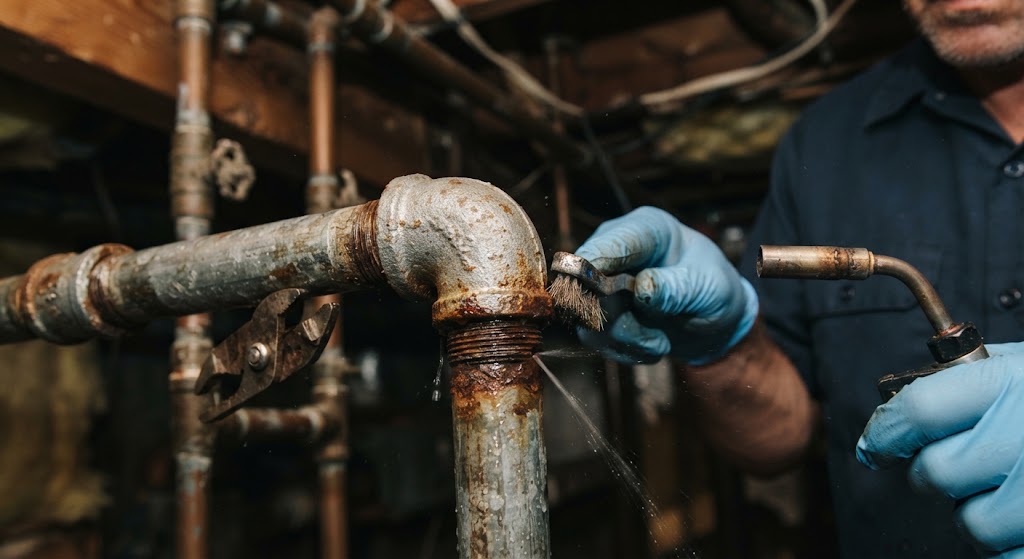
Pipe leak repair in Belleville NJ showing technician inspecting corroded copper pipe joints

Signs of Deteriorating and Leaking Pipes

Pipes often provide subtle physical warnings before catastrophic failure occurs. Watch for these symptoms:

Greenish-White Crust on Copper (Patina)

Oxidation buildup, crusty green deposits, or chalky white rings on copper elbows and solder joints indicate that water is slowly weeping through micro-pinholes under pressure.

Discolored or Rust-Tinted Water

Reddish or brownish water flowing from faucets when fixtures are turned on signals internal flaking and severe oxidation within aging galvanized supply pipes.

Sudden Drop in Household Water Pressure

A noticeable loss of flow when showering or running the kitchen faucet often points to an unaddressed split in a main trunk line or substantial scale accumulation.

Ticking or Dripping Sounds Behind Walls

Thermal expansion and contraction in leaking pipe runs creates rhythmic clicking, ticking, or dripping acoustics inside enclosed stud cavities when hot water is used.

Localized Damp Spots on Ceilings and Trim

Moisture rings spreading on plaster, sagging ceiling paint, or damp baseboards directly underneath second-story plumbing lines confirm an active pipe joint failure.

Unexplained Pressure Fluctuations

Rapid cycling of well equipment or intermittent pressure surges often point to an undetected pressure relief failure or split pipe seam.

Seeing corrosion or hearing water dripping inside your walls?

Do not let a slow drip become an active flood. Speak with a local leak specialist now.

Call (201) 510-1615

Why Belleville Residential Pipes Fail

Residential plumbing throughout Belleville experiences predictable failure modes:

  • Copper Pinhole Corrosion: Domestic water chemistry combined with turbulent water velocity causes internal pitting in thin-walled type M copper pipes, leading to microscopic pinhole breaches.
  • Galvanized Pipe Longevity Limits: Installed widely prior to the 1960s, galvanized steel lines corrode from the inside out. Threaded joints thin down until they fracture under nominal water hammer.
  • Freeze-Thaw Temperature Swings: Essex County winters bring prolonged freezing spells. Pipes running through uninsulated exterior overhangs, unheated basements, or along cold outside foundation walls freeze, expand, and rupture.
  • Failed Mechanical & PEX Fittings: Improperly crimped PEX rings or failing compression valves in older renovations can loosen and leak silently over time.

Safety Precaution Notice

Natural Gas Safety Reminder: Boiler and furnace lines frequently run parallel to domestic plumbing pipes. If you smell natural gas or sulfur at any point, evacuate the premises immediately and call 911 or your local gas utility. We strictly diagnose and locate potable water pipe leaks.

Our Non-Invasive Pipe Diagnostic Procedure

Step 1: Systematic Manifold & Zone Testing

We test individual hot and cold supply lines using digital pressure transducers, methodically isolating branch lines to identify which specific pipe circuit is compromised.

Step 2: Acoustic Contact Microphones

Sensitive acoustic probes place contact sensors directly on exposed valves and fittings to track high-frequency sound waves generated by escaping pressurized water.

Step 3: High-Resolution Thermal Imaging

Infrared cameras detect thermal signatures through drywall, subflooring, and ceiling plaster, tracking hot or cold water plumes back to the exact physical pipe rupture.

Step 4: Non-Destructive Moisture Profiling

Calibrated electronic moisture meters measure depth moisture without puncturing materials, mapping water boundaries to confirm pinpoint precision before any cutting begins.

What Happens After the Leak is Pinpointed?

Once the exact location and nature of the pipe failure are pinpointed, the homeowner can review strategic repair paths with a licensed contractor:

  • Localized Spot Repair: Cutting out the compromised 6 to 12-inch section of copper and sweating in replacement copper or using approved transition fittings.
  • Sectional Branch Replacement: If localized corrosion indicates widespread thinning along an entire wall run, replacing the full branch prevents recurring leaks weeks later.
  • Full System Repiping: For older Belleville residences with completely deteriorated galvanized steel systems, repiping in flexible cross-linked polyethylene (PEX) or modern copper is the definitive long-term solution.

Plumbing repairs must be executed by a New Jersey licensed master plumber.

Key Cost Factors Explained

The overall expense of repairing a pipe leak depends on specific mechanical criteria:

  • Pipe Location & Accessibility: An exposed pipe in an open basement ceiling requires significantly less labor to access than a pipe enclosed behind tiled bathroom walls or beneath hardwood floors.
  • Extent of Deterioration: Addressing an isolated pinhole is far simpler than replacing a long span of heavily oxidized galvanized piping.
  • Pipe Material Requirements: Transitioning between mismatched metals requires specialized dielectric fittings to prevent rapid galvanic corrosion.

Pipe Maintenance & Prevention Advice

Take proactive measures to extend the lifespan of your plumbing:

  • Regulate Household Water Pressure: High municipal pressure above 70 PSI stresses fittings; install a pressure-reducing valve to stabilize supply pressure at 55 to 60 PSI.
  • Insulate Pipes Before Winter: Wrap pre-slit foam insulation around all exposed pipes in unconditioned crawl spaces, basements, and exterior walls.
  • Eliminate Water Hammer: Install water hammer arrestors near quick-closing appliance valves to absorb damaging hydraulic shock waves.

When Pipe Leaks Constitute an Emergency

A burst pipe from winter freezing or a sudden seam split demands fast emergency action to prevent devastating structural and electrical damage:

  1. Shut off the main water shut-off valve immediately to depressurize the system.
  2. Turn off electricity to affected rooms at the circuit breaker box.
  3. Open lower-level faucets to drain remaining water out of the plumbing lines.

Visit our dedicated emergency leak repair resource for comprehensive emergency steps.

Common Neighborhoods & Frequently Asked Questions

Aging pipe issues and pinhole corrosion are widespread across the Belleville Park area and throughout the historic two-family homes of Silver Lake.

What causes pinhole leaks in copper plumbing?

Pinhole leaks in copper pipes typically develop from internal pitting corrosion driven by water chemistry, high dissolved oxygen, aggressive water velocity, or stray electrical currents grounded through plumbing systems over decades.

Should I patch a pinhole leak or replace the entire pipe section?

Temporary pipe clamps or patches are short-term emergency stopgaps. Because pitting corrosion indicates thinning metal along the interior pipe wall, replacing the affected section with new copper or PEX is the proper permanent solution.

How can you locate a pipe leak without cutting into my walls?

We utilize acoustic listening ground sensors and thermal infrared cameras that detect the distinct sound frequency and temperature patterns of escaping water right through sheetrock and plaster.

Related Leak Detection Services

Facing a sudden burst line? Visit emergency leak repair. If you suspect water is escaping behind finished walls, explore hidden water leak detection, or return to our homepage for leak detection in Belleville and view our service areas.

Call (201) 510-1615
Call (201) 510-1615